What should I ask at parents' evening?
At parents' evening, you can ask how your child is getting on, what they can do and what to practise at home, and here are questions and a plan for afterwards.

At parents' evening, you can ask about three things: how your child is getting on at school, what they can do and are working on now, and what you can do at home. Write down a few specific questions before you go, and bring something your child has told you. That makes it easier to cover what matters most, even if the meeting is short.
In Norway, this meeting may be called an utviklingssamtale or a foreldresamtale, a planned conversation with the contact teacher about how the child works, learns and gets on with others. Chapter 11 of the Norwegian education regulation says primary schools must invite parents to such a meeting at least twice a year, and that it should also clarify how the child, the school and the family will work together. These are Norwegian rules, so ask your child's school how its meetings work.
The meeting is not a test of your child or of you. It is a chance for you and the teacher to share what you each see.
What can you ask the teacher?
You can ask about wellbeing, learning, lessons, homework and contact, ideally specific enough for the teacher to answer with an example. Choose three or four, so you have time to talk about them properly:
- Wellbeing: Who does my child spend time with at break? Does my child seem settled and secure in class?
- Learning: What can my child do in reading and maths now, and what is the next step?
- In lessons: What does my child do when a task is hard? Does an extra explanation help?
- At home: How long should homework take? If we practise only one thing, what should it be?
- Contact: How would you like us to get in touch if something comes up?
Also ask what the teacher thinks your child does well. The answer gives you something to take home to your child, and it tells you how the teacher sees them.
If something worries you, raise it yourself, even if the teacher does not mention it. If you run out of time, you can ask for another meeting.
How can your child help you prepare?
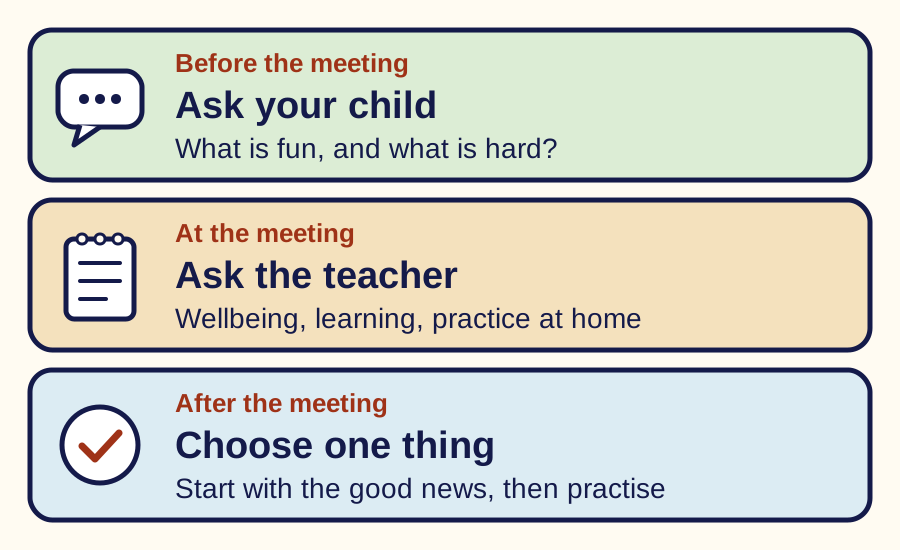
A few days before the meeting, your child can help by telling you what school is like. Then you bring your child's own words, and the teacher hears how school looks from your child's side.
Choose a moment when your child is already chatting, such as at dinner, on the way home or at bedtime. Ask about something specific, such as “Who did you play with today?”, rather than “How is school?”. You can also ask an older child what they would like to get better at.
Under the Norwegian rules, pupils aged twelve and over have the right to attend. Ask your child's school whether your child should join all of the meeting or part of it.
Tonight, ask your child these three questions and write down the answers afterwards:
- What is the best thing about school right now?
- Is anything hard or boring?
- Who do you like spending time with at break?
Tell your child that you are going to talk with the teacher about how they are doing and what they are learning. Ask whether there is anything they would like you to tell the teacher.
What do you do after parents' evening?
After parents' evening, tell your child something good the teacher said, and choose one thing to practise at home. One thing is enough. Several things at once can soon start to feel like nagging, for both of you.
Start with the good news, ideally in the teacher's own words: “Your teacher said you are good at helping others.” Then present what you will practise as a plan, not as criticism: “Your teacher said telling the time is the next step. Shall we practise it for a few minutes after dinner this week?”
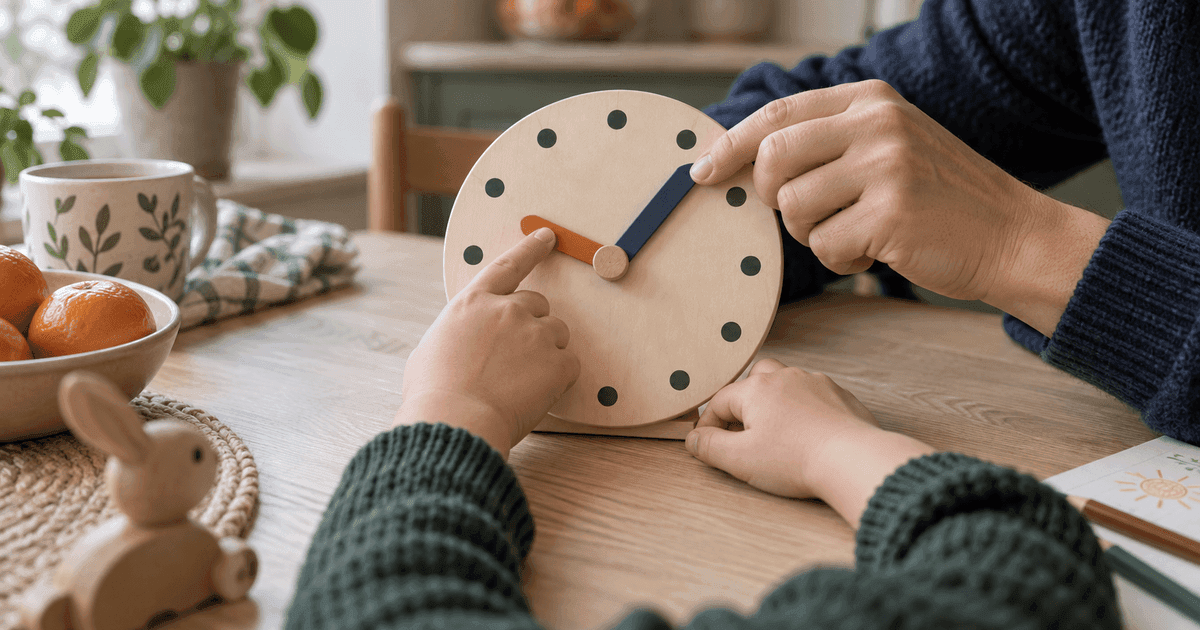
Keep the practice short, and ask the teacher at the next meeting how it is going. If the teacher mentions the clock, you can read what schools expect children to know about the clock, based on the Norwegian curriculum. For short practice ideas, see how to practise telling time at home.
If telling the time becomes something to practise at home, Klokkeappen is the app we have made for it. Children practise analogue and digital time with spoken instructions and games. The app is meant for practice and repetition, so new ideas may need an explanation from you or the teacher first. The app stores list no ads or purchases within the app, and you can check supported languages and pricing there.