Should my child be able to tell time by now?
Ask the teacher what the class is working towards. At home, start with what your child knows about time and build on it without comparing classmates.

Your child’s teacher can explain what the class is working towards and when they will practise telling time. At home, you can start with what your child already understands. Learning the clock is not a race, and it is fine to take it a little at a time.
Telling time is a collection of skills developed over time, rather than something completed on one particular day. Looking at your child’s next step is more useful than comparing them with classmates.
Who can explain what school expects?
The teacher knows both the class plan and your child. Ask what they are currently learning, which words they use and whether there is anything useful to practise at home.
In Norway, the mathematics curriculum includes explaining how time can be described using a clock and calendar among the goals after Year 2. It does not specify every time a child must read. This is the Norwegian curriculum, not a statement about school requirements in other countries.
You could ask:
- Is the class working on the clock now, or later?
- What does my child already understand, and what comes next?
- Is there anything you would like us to practise at home?
If time appears in the class’s weekly plan, use that as a starting point. Your child then meets the same ideas and vocabulary in both places.
How can you see what your child knows?
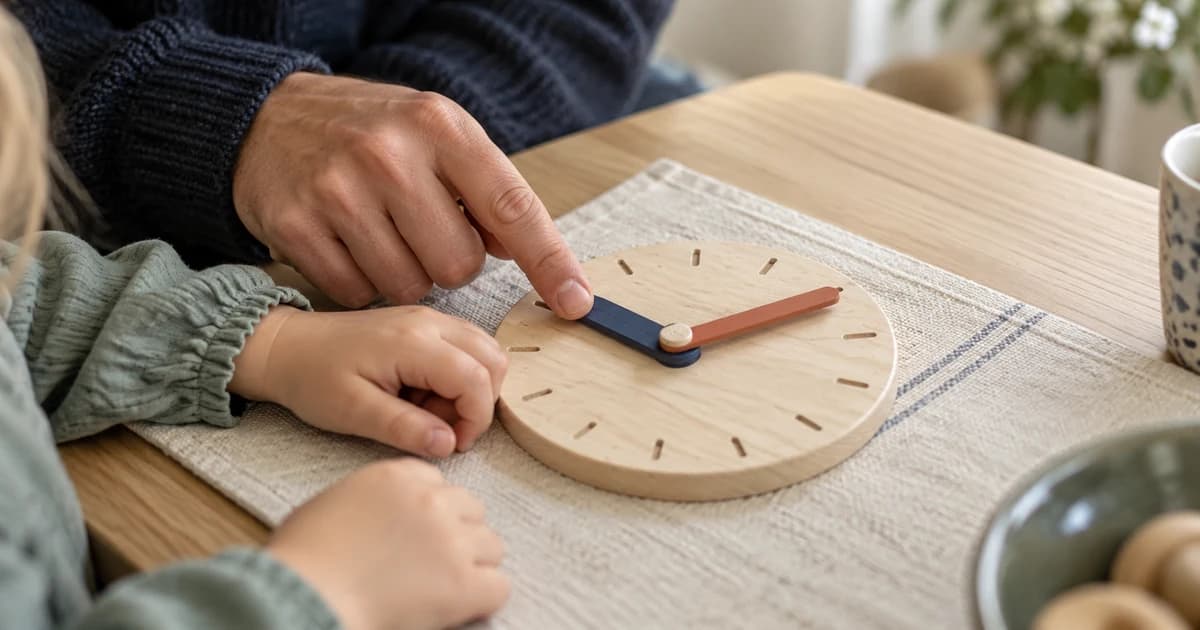
Show a few times and listen to the explanation. Keep it playful and finish before it becomes tiring. Start with a whole hour.
If whole hours feel familiar, try half past. At half past two, the short hand has left two but has not reached three. English names the hour that has passed. Scandinavian languages name the coming hour, which can be useful to explain in a multilingual family.
Next, try quarter past and quarter to. The point where your child needs more time is a useful place to continue practising.
Read more about learning the clock step by step, from whole hours to counting minutes in fives.
What if your child finds it difficult?
Return to a familiar step until your child feels comfortable again. Being able to read whole hours is already something to feel pleased about.
Connect the clock with something your child cares about, such as dinner or going outside. Say the time when it happens. Small moments can become practice without needing a separate activity. If you are just beginning, see how to introduce the clock.
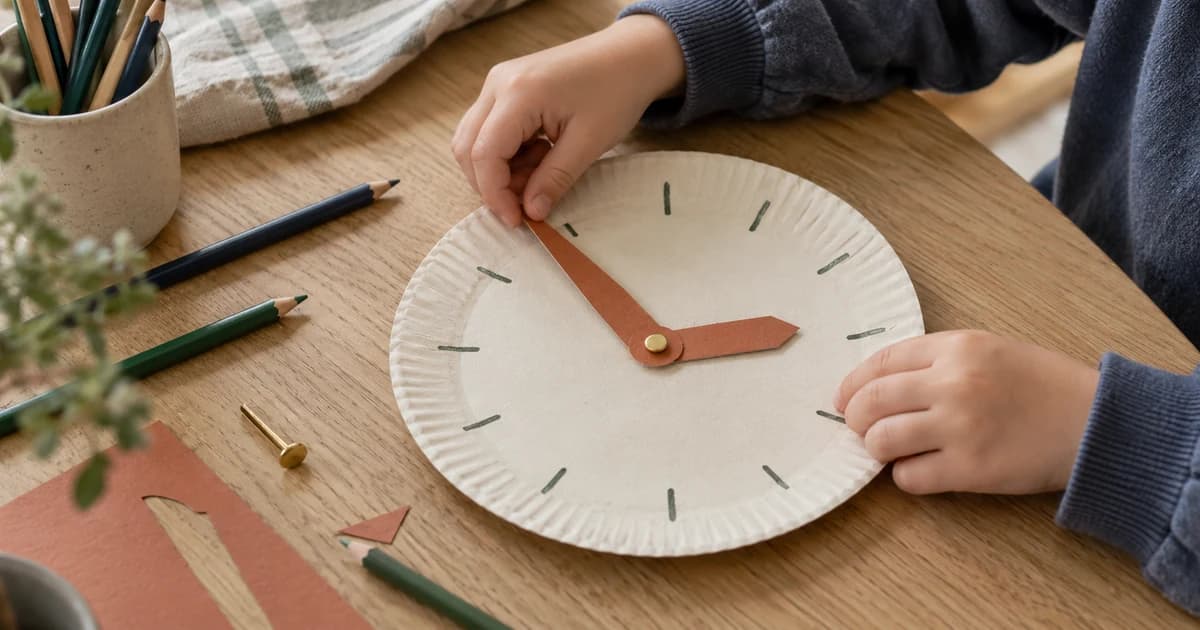
Tonight, set a real or paper clock to two o’clock and half past two and listen to what your child says. If your concern goes beyond telling time, talk it through with the teacher.
Klokkeappen introduces tasks gradually and offers spoken practice. New ideas may still need an explanation from you or the teacher first.