How can I help my child with reading homework?
Help your child with reading homework by sitting beside them for a short, calm session, helping with sounds when they get stuck and praising what goes well.
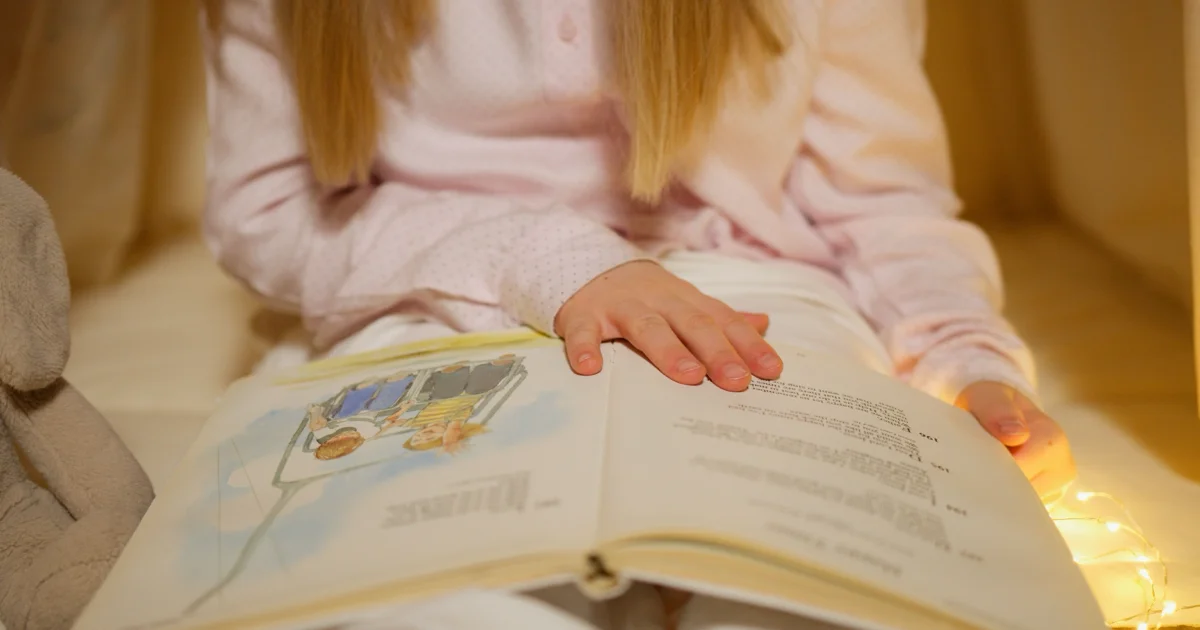
You can help your child with reading homework by sitting beside them, letting them try on their own first and helping with the sounds when they get stuck. A short, calm session does more than a long and tiring one. Praise what your child actually manages, and stop while it is still going well.
Perhaps the reading book comes home every day, and homework has to be done when everyone is tired after school and work. That is when reading easily turns into a tug of war. Children learn to read at different speeds, and what you do at home is mostly about making reading feel safe.
What is your child practising in reading homework?
In the first years of school, your child mainly practises blending sounds into words, and gradually reading fluently and understanding the text. In Norway, where we at MOTH are based, the curriculum for Norwegian says that by the end of Year 2, when they are 7 to 8 years old, pupils should be able to blend letter sounds into words when reading and writing, and read with coherence and understanding.
Blending sounds together is often called sounding out. Your child says the sounds in the word one after another, s, u, n, and hears them become “sun”. It takes time, and many children sound out words for a long while before the words come on their own.
In the first year, reading homework is often a few short words or sentences to sound out. In the second and third years, children often read the same text several times a week. This is not to learn it by heart, but so reading gets easier each time and they have energy left to understand it.
If you are unsure what the homework is for, ask the teacher. It also fits well among the questions you can ask at parents' evening.
What do you do when your child gets stuck on a word?
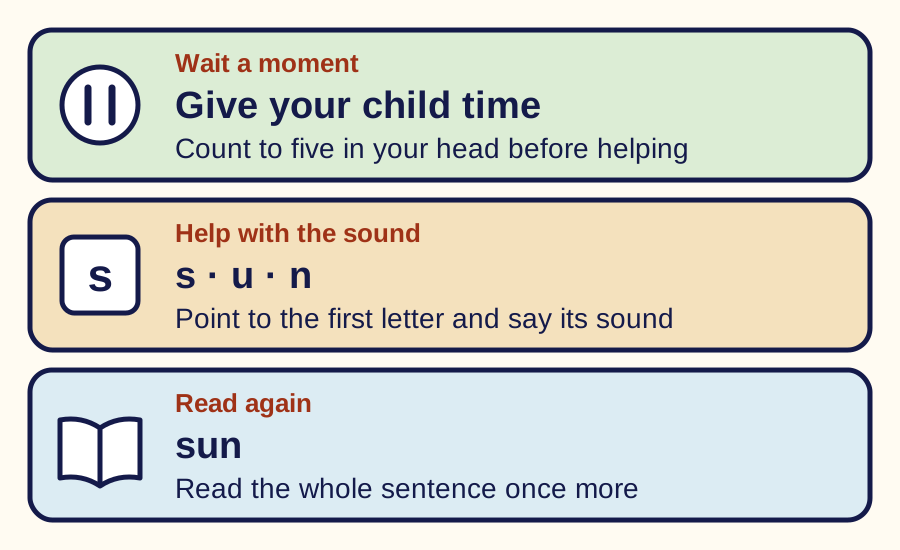
When your child gets stuck, first give them a little time, and then help with the sound rather than the whole word. Count to five in your head before you say anything. Many children find the word themselves when they get that small pause.
If your child still cannot move on, point to the first letter and say its sound. Then say the rest of the sounds together with your child, and let them say the word. After that, read the whole sentence once more so your child hears how it fits together.
Some common words, such as “the”, “said” and “was”, are not spelled the way they sound, so sounding them out does not help much. Say the word and let your child read on. Over time your child will recognise them as whole words.
If your child reads a word wrongly but the meaning stays the same, you can wait until the end of the sentence before saying anything. If every word is corrected straight away, it becomes hard to follow the story.
Praise something specific. “You read that long word all by yourself” tells your child more than “well done”. If your child gets tired, you can take turns, so you read one sentence and your child reads the next. It is better to stop while it is going well than to push through a whole page.
Should you keep reading aloud when your child can read alone?
Yes, ideally. When you read aloud, your child meets words and stories that are harder than what they can read on their own, and you can talk about them afterwards. Listening to and talking about books is also part of learning to read.
Reading homework and reading aloud can be two separate moments. The homework is your child's job, and it is often short. Reading aloud is yours, and your child can simply listen. Ask what your child thinks will happen next, and let them tell you.
Let your child choose a book now and then, for example at the library. A book about something they already like, such as animals, football or space, makes them want to hear more. An older child who reads well may still enjoy being read to.
Tonight, you can try this with the reading homework:
- Let your child read the text once while you just listen.
- Choose one word that was difficult and say its sounds together.
- Let your child read the text once more.
- Say one thing that went more easily the second time.
Ten minutes is enough. If you wonder how schools in Norway follow up reading in Year 3, you can read about what the Norwegian Year 3 screening test means.
At MOTH, we make learning apps for children, and Bokstavappen, for Norwegian letter sounds and words, is still in development. The one we have released is Klokkeappen, where children practise telling the time on analogue and digital clocks with read-aloud tasks and games. It is meant for practice and repetition, and the app stores list no ads or in-app purchases. You can check supported languages and pricing there too.