Can board games help children learn the clock?
Board games, dice and cards give children practice counting on, counting in fives and following a sequence, all useful when learning to read a clock.
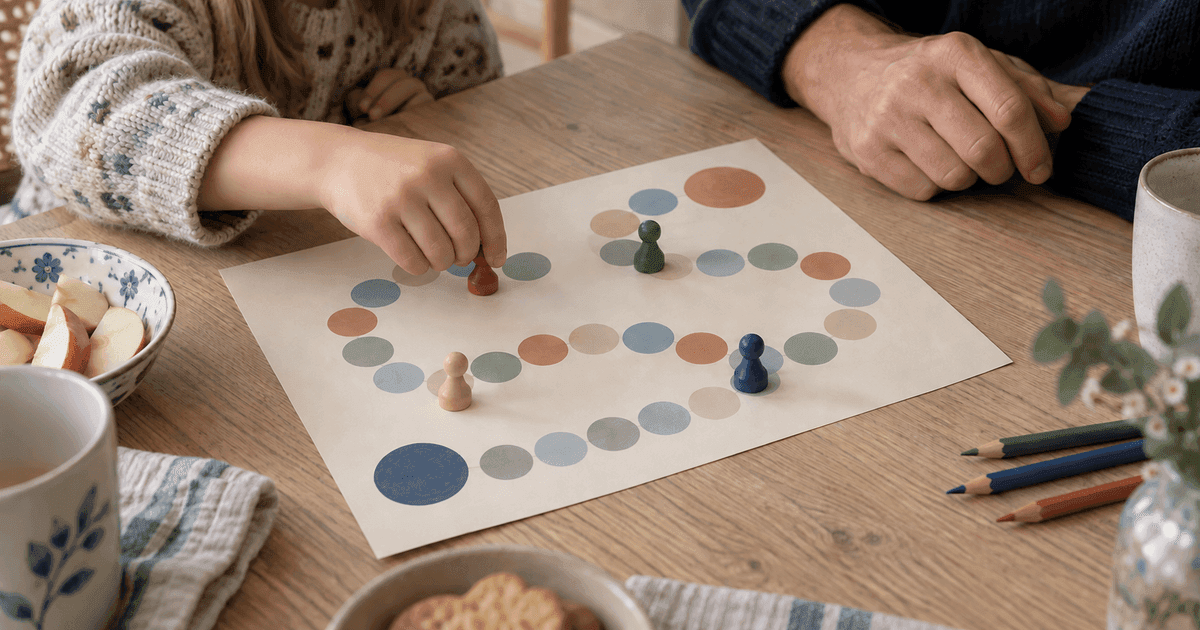
Board games, dice games and card games involve skills that also appear when reading a clock: counting on from different numbers, counting in fives and following a sequence. Your child does not need to think of it as practice. You can simply play and notice the connections.
Perhaps there is a game or pack of cards in the cupboard that has not been used for a while. It does not need a learning goal to be worth an evening together. But if your child is exploring the clock, it can be helpful to see what is happening around the table.
What do a board game and a clock have in common?
A board with a numbered track and a clock both have numbers arranged in order. Moving a counter means counting forward and seeing how far remains. Four steps from one place end somewhere different from four steps from another.
A clock face is rather like a number track bent into a circle. After twelve, it returns to one. Norway’s mathematics curriculum includes number lines, rules in games and describing time with clocks and calendars among its goals after Year 2. This is a connection within the Norwegian curriculum, not a statement about requirements elsewhere.
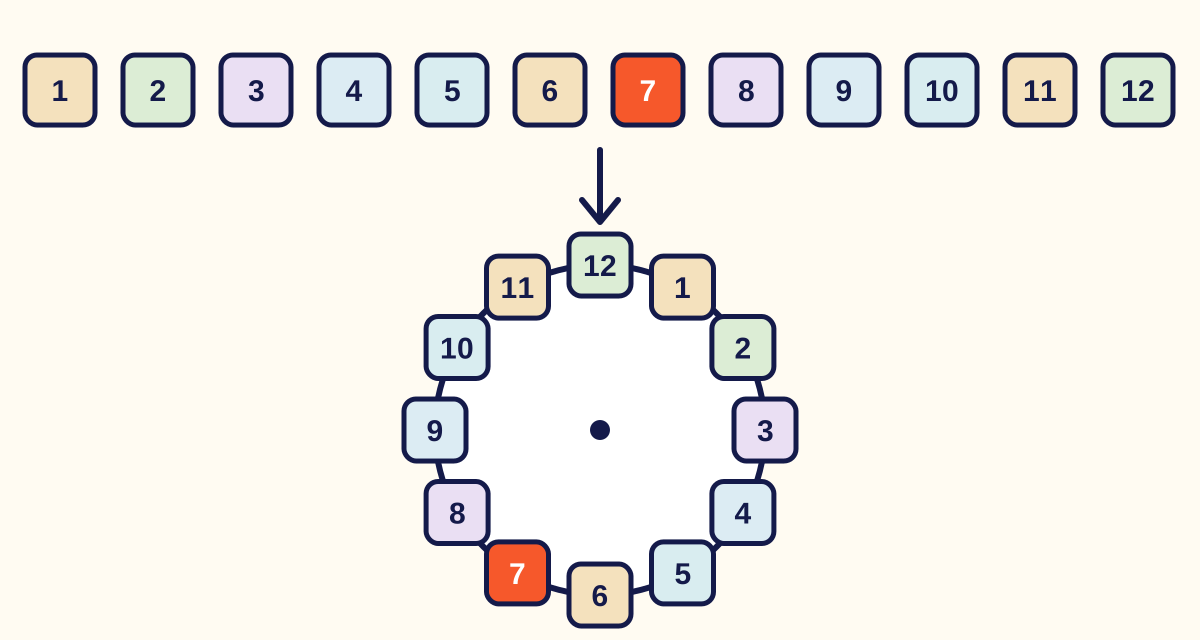
For example, a counter on seven followed by a roll of four means counting eight, nine, ten, eleven. Counting forward also helps when thinking about how many hours remain until eleven.
How can dice help with counting minutes?
In a game such as Yatzy, adding the dice showing five gives practice counting in fives. One way to read minutes is to count five at a time around the clock, from twelve to the long hand.
Once whole and half hours are familiar, minutes may still feel like a new challenge. That does not mean the clock is too difficult. Counting five, ten, fifteen and twenty may simply need more practice. Counting the fives in a dice game uses the same sequence.
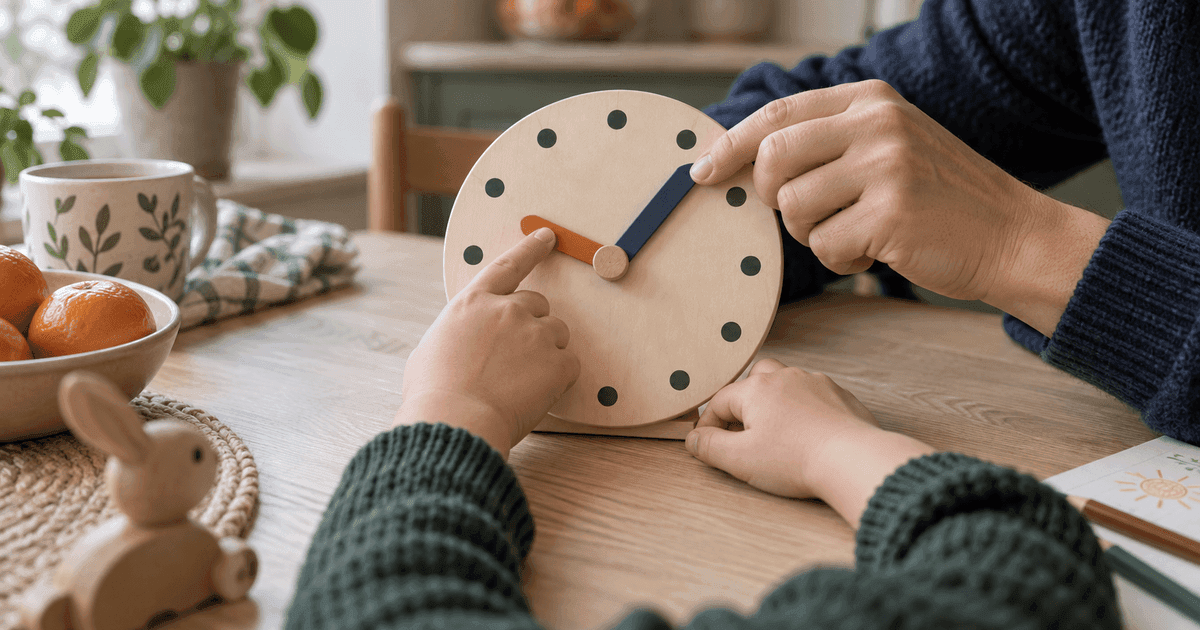
You can involve the clock directly too. Look at the beginning and end of the game and count how far the long hand has moved.
What does following game rules have to do with time?
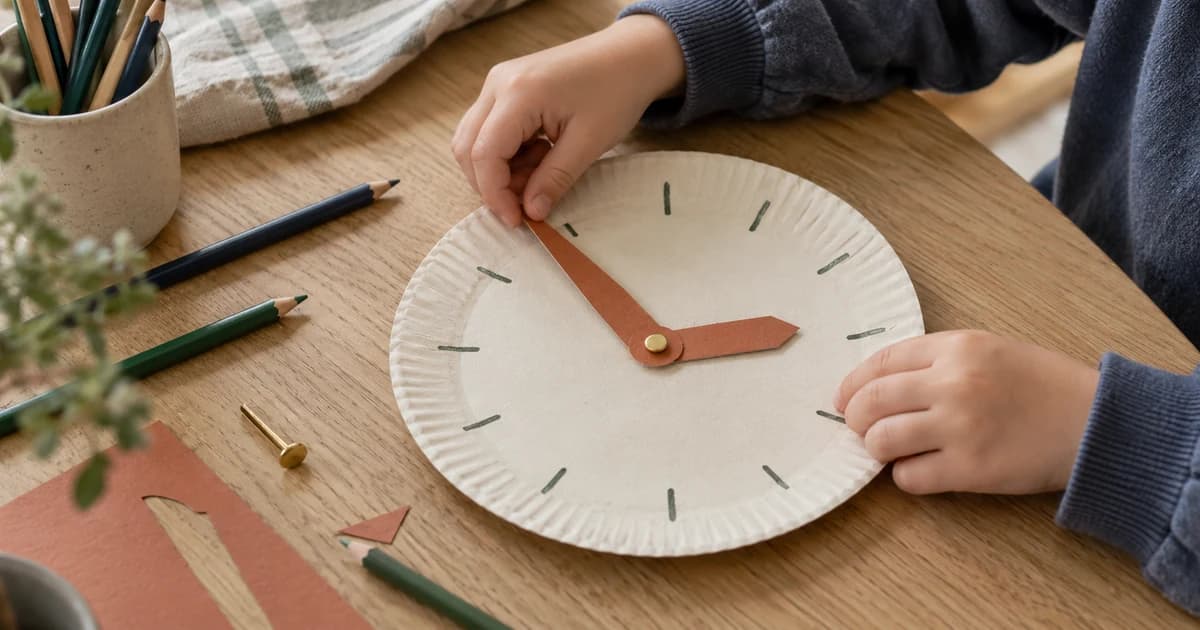
Both can involve doing things in a useful order. In a game, you roll, move and pass the die. On a clock, you can look at the short hand for the hour and then the long hand for the minutes.
If your child mixes up the hands, try a familiar instruction: “First the short hand, then the long hand.” Keep the explanation brief and return to the game.
Tonight, choose a game you already own. Let your child count aloud while moving a counter. If you play Yatzy, count the fives together. Notice the time at the start and finish, then leave it there. A game should still be allowed to be a game.
For more ideas, explore clock games at home or learning the clock step by step.
Klokkeappen offers gradual practice through spoken tasks and games. It is developed with educators and special educators for practice and repetition. New ideas may need an adult’s explanation first.