How can children learn time through play?
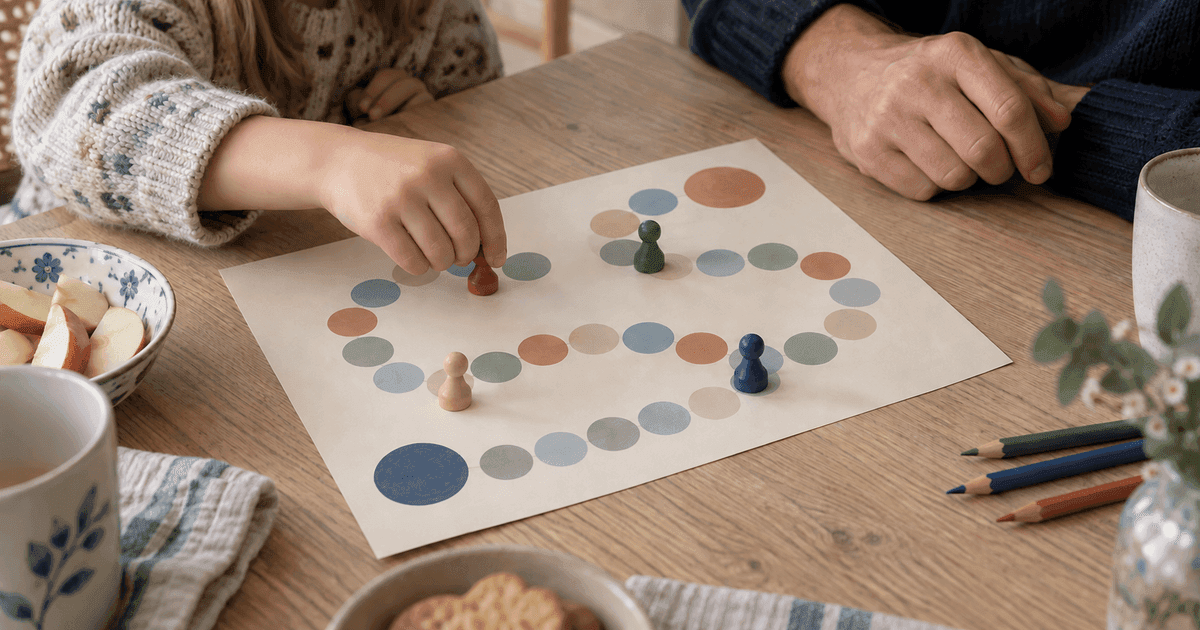
Try setting a toy clock, spotting clocks on a walk or guessing how long a task takes. Simple games give your child room to practise and try again.
Your child can explore telling time through small games: setting a clock, spotting clocks and guessing how long things take. In a game, a wrong answer is just another turn. There is room to try again.
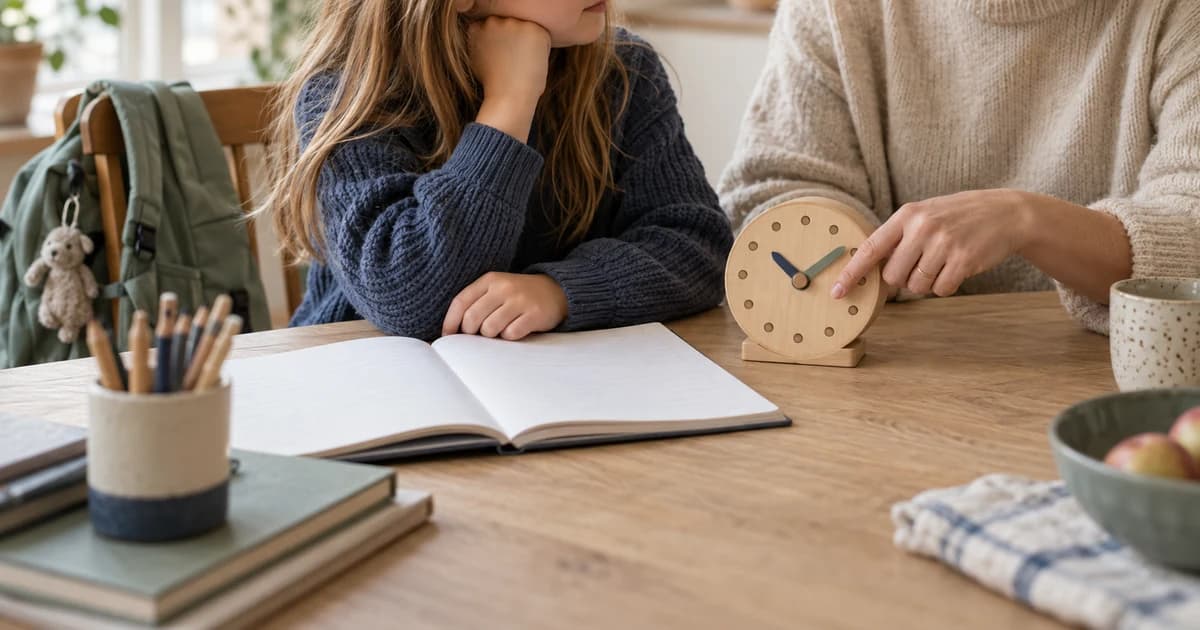
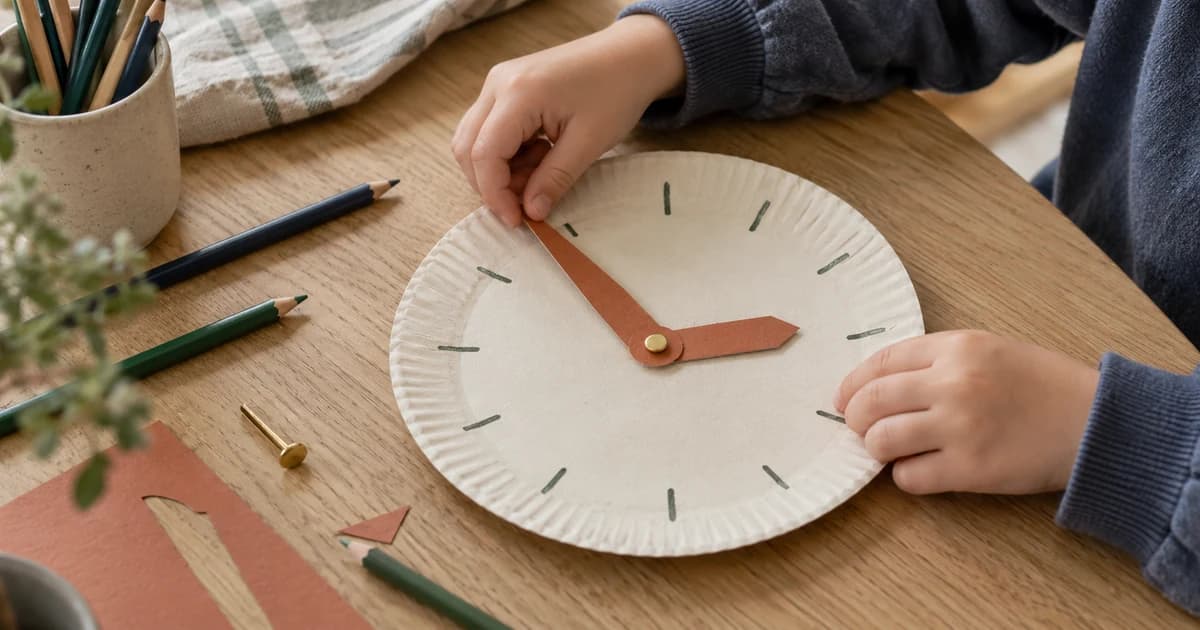
You do not need to buy anything. A wall clock, a toy clock or a clock drawn on a paper plate will do. Let your child move the hands, guess and make mistakes without pressure.
Why does play suit learning to tell time?
Learning the clock involves seeing and doing the same things many times. Games bring those repetitions naturally. Reading twenty clocks on a worksheet may soon feel repetitive. Setting the hands for a parent to guess can feel different each time.
Moving the hands can make their relationship easier to notice. On a clock with linked hands, the long hand makes a full turn while the short hand moves to the next number. With a paper clock, move both hands yourselves and talk about what happens.
Play also gives your child a role. They might ask the questions, set the clock or keep time. The clock becomes something they use, not just something an adult asks them about.
Which clock games could you try?
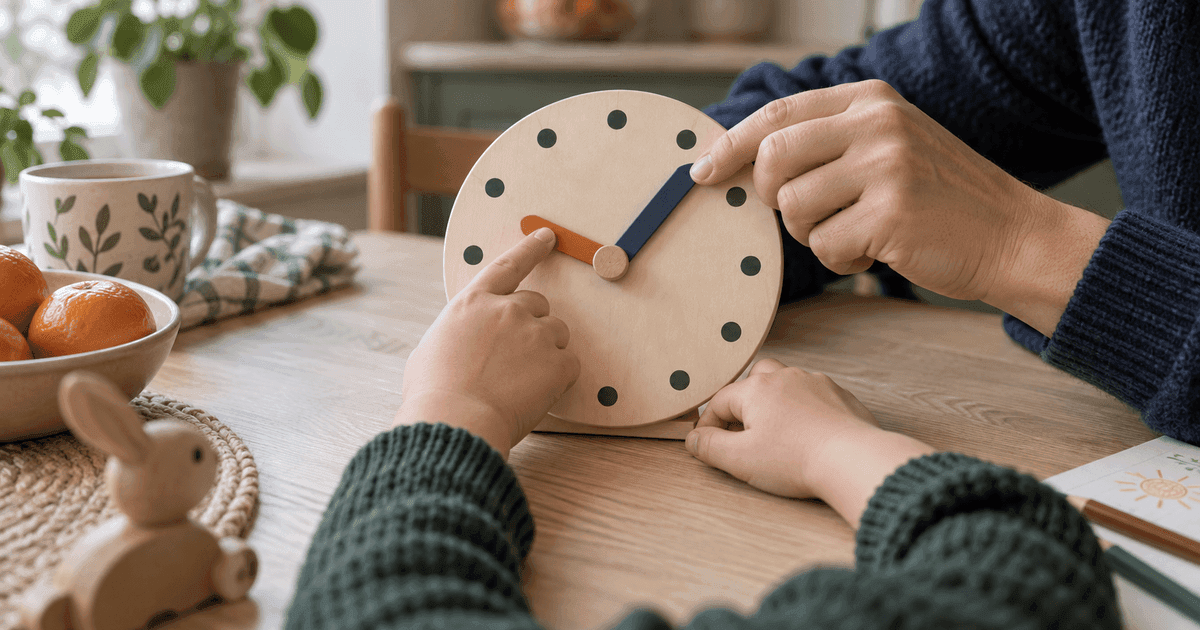
Set the clock. Say a time and ask your child to move the hands. Then swap roles. Occasionally make a mistake yourself so your child can explain it. Start with whole hours, adding half hours and quarters when those feel comfortable.
Clock hunt. Look for clocks at home, in a shop or on the way to school. Read each one together. Clocks with hands and digital displays both count. This can make an ordinary walk a little more interesting.
Guess how long. Before tidying, brushing teeth or getting dressed, guess how long it will take. Check the clock at the beginning and end, then compare your guesses.
If you are unsure which times to practise, read our suggested order for learning the clock. It explains why half hours and quarters can take longer to understand.
How do you keep the game enjoyable?
Stop while the game is still enjoyable and choose times that mostly feel manageable. That leaves space to want another turn tomorrow.
Include an occasional harder question among familiar ones. If everything is easy, try the next step. If several answers in a row are difficult, return to something your child knows. There is no need to make each round harder than the last.
Tonight, try five minutes of Set the clock after dinner. Choose whole hours connected with your child’s day. More ideas are in our guide to practising time at home.
Klokkeappen has spoken tasks and games for practice at the child’s own pace. It has no advertising, so tasks are not interrupted by ads. Check the app store for the app’s supported languages before buying.