In what order should children learn to tell time?
Begin with whole hours, then half hours, quarter past and quarter to, before counting minutes in fives. Let each step settle before moving on.
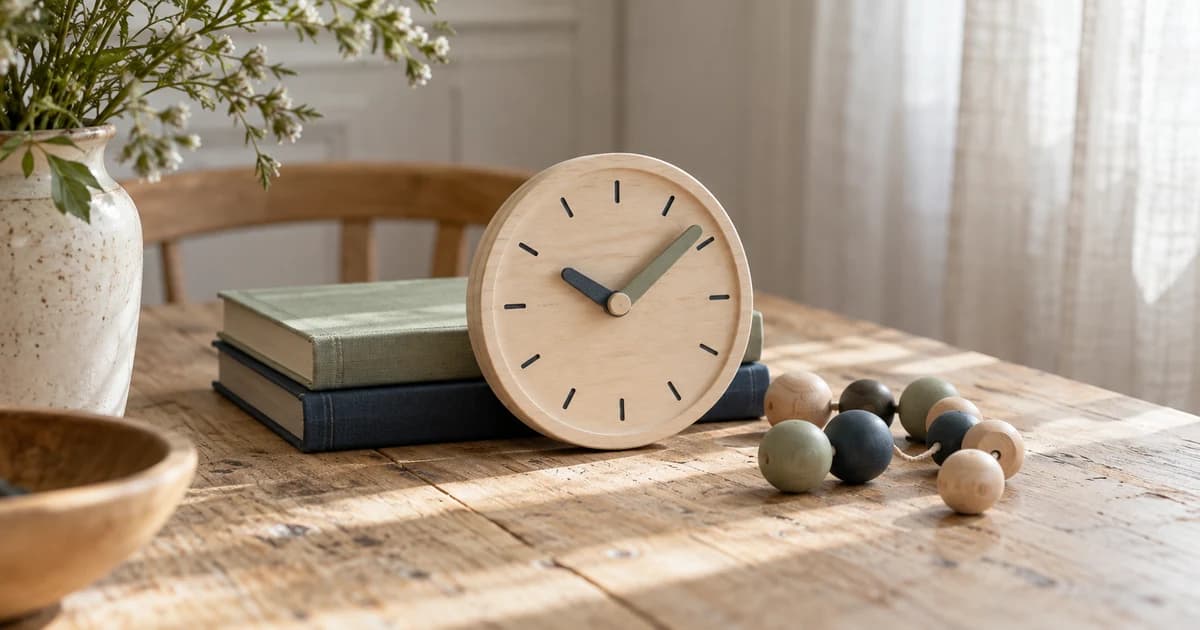
A gentle order is whole hours, half hours, quarter past and quarter to, followed by counting minutes in fives. Each step builds on the last, so your child only needs to tackle one new idea at a time. Move on when it makes sense to them, rather than according to a deadline.
Some steps may come quickly and others may need more time. Both are ordinary parts of learning. Here is why this order can help and where the tricky parts often appear.
Why start with whole hours?
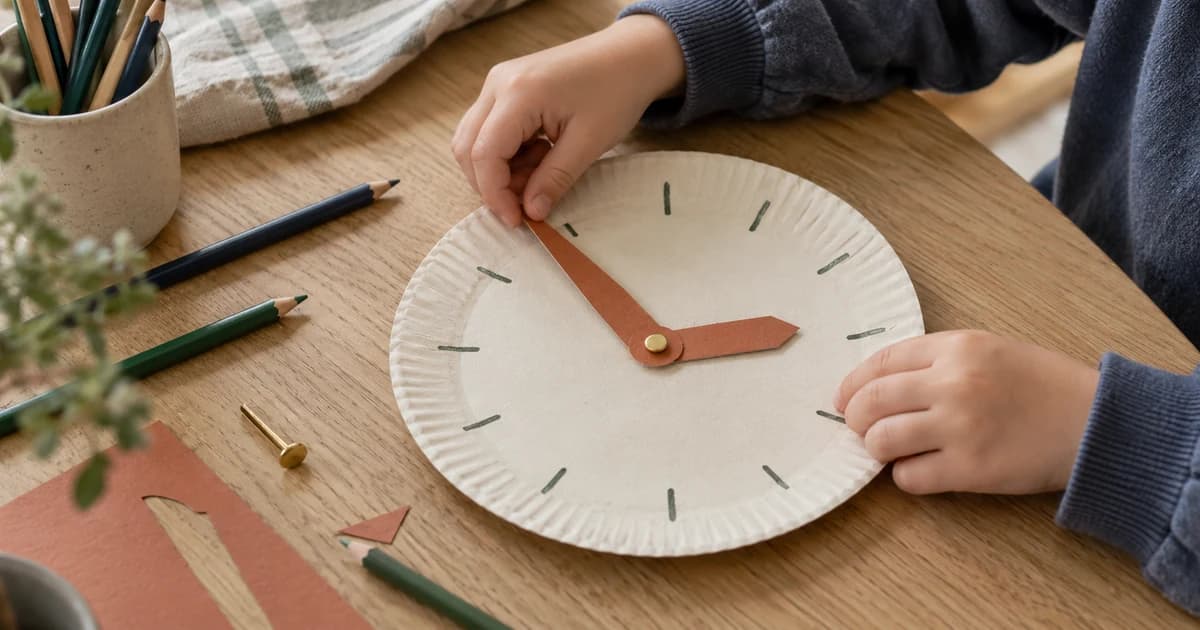
At a whole hour, the minute hand, which is the long hand, points straight up at twelve. Your child only needs to read the hour hand, which is the short hand.
That gives a simple starting point. If the short hand points to five and the long hand to twelve, it is five o’clock. Repeat this with familiar hours from the day. If you are just getting started, read how to introduce the two hands.
Why do half hours and quarters take more thought?
Half hours and quarters cannot simply be read as numbers on the face. They describe parts of the long hand’s journey around the clock.
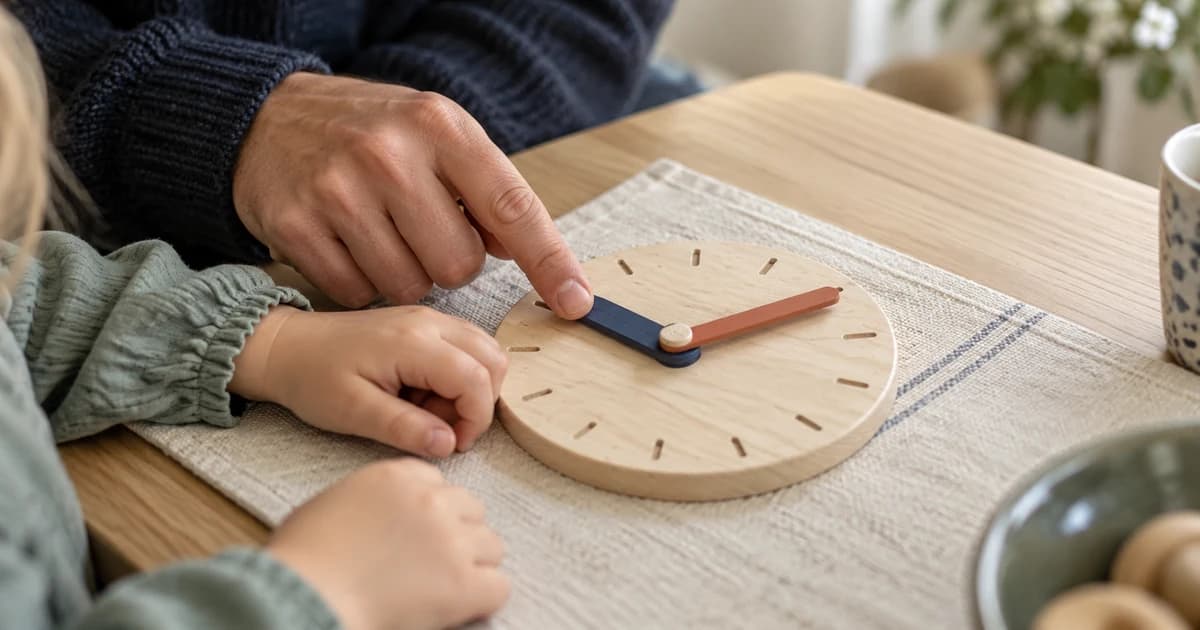
At half past four, the long hand points down at six and the short hand sits halfway between four and five.
Ask which hour the short hand has passed and which one it is approaching. In English, “half past four” refers to the hour that has passed. Norwegian, Swedish and Danish expressions for this same time refer to being halfway to five. Explaining that difference matters when children hear more than one language.
Twelve, three, six and nine divide the face into four equal pieces. Each piece is a quarter of an hour. At quarter past four, the long hand has travelled from twelve to three. At quarter to five, it points to nine, with one quarter of a turn remaining.
A paper circle divided into four, or a pizza cut into quarters, can make the idea visible. Lay a paper cross over a drawn clock and look at the four sections together.
When should you introduce minutes?
Once hours, half hours and quarters feel familiar, show that each number represents five minutes for the long hand. One means five minutes, two means ten, and so on.
Count aloud around the face: five, ten, fifteen, twenty. In English, 7:20 is twenty past seven. Scandinavian wording may describe the same point relative to the coming half hour. Use one language consistently while introducing the idea.
Practise counting in fives during a walk or journey. Later, point to a number and ask how many minutes it represents. Reading minutes and feeling them pass are different skills, as we explain in how long five minutes feels to a child.
Tonight, choose three times from your child’s current step. If those feel comfortable, try one from the next step. Klokkeappen offers gradual practice with analogue, digital and English time expressions through spoken tasks.