How do I explain the clocks going back to my child?
When the clocks go back, the time moves back one hour, and you can explain it to your child by changing a clock together and talking about bedtime.
When the clocks go back, we turn them back one hour. In Norway this year it happens in the early hours of Sunday 25 October: at three in the morning, the clocks are set back to two. You can explain it to your child by changing a clock together: the short hand moves back one number, and only the clock changes, not the sun.
Perhaps your child has heard someone say “we get an extra hour” and wonders where it comes from. Or perhaps your child is wide awake and ready for breakfast on Sunday morning while everyone else is still asleep. Both have to do with the clock, and the change is a good chance to practise telling the time.
What happens when the clocks go back?
When the clocks go back, they move back one hour, so the same hour comes round twice during the night. In Norway this happens on the last Sunday in October. The clock goes from two to three as usual, and when it reaches three, it is set back to two. Other countries may change at a different hour of the night, so check your local time.
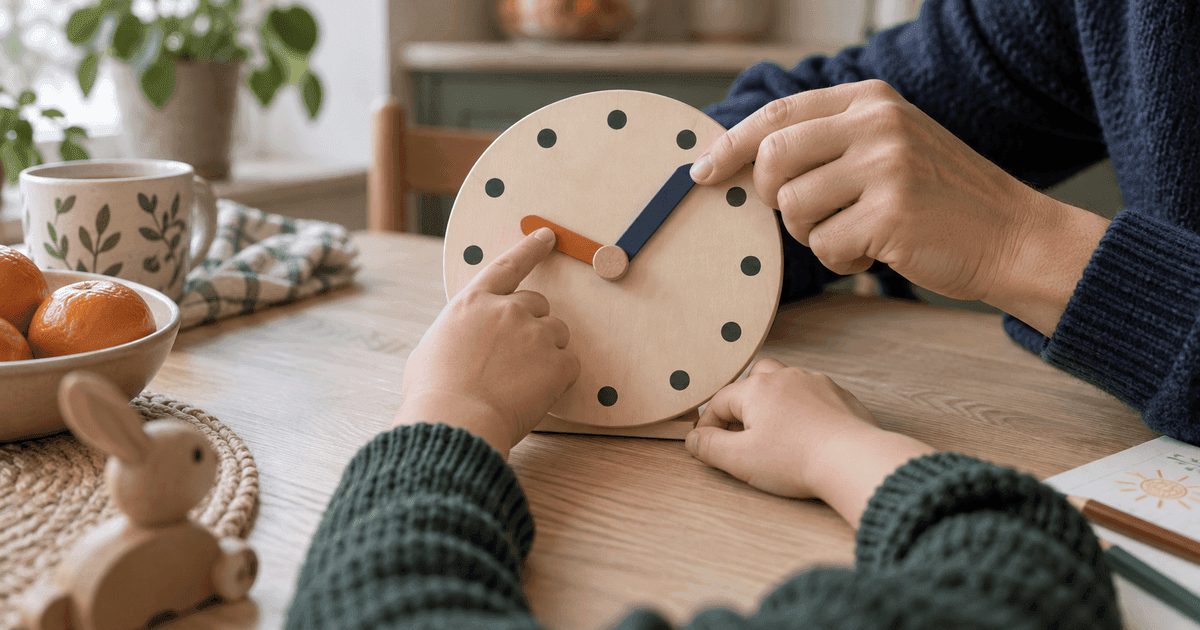
For a child who is learning to tell the time, you could put it like this: “Tonight the short hand gets to go back one number.” The long hand ends up where it started. A younger child does not need more than that, and may enjoy seeing it on a real clock.
An older child can do a little maths with you. Saturday night is one hour longer than usual, so Sunday has 25 hours. If your child goes to bed at eight and gets up at seven, you can count the hours together on the clock. It is usually eleven hours, but that night it is twelve, as long as your child sleeps until seven by the new time.
Phones usually update themselves. A wall clock, an alarm clock or the clock on the cooker often has to be changed by hand, and your child can help with that.
How does the change affect bedtime and mornings?
In the first days after the clocks go back, your child may feel tired an hour earlier by the clock and wake up an hour earlier in the morning. The body keeps to the old time for a while, so seven in the evening feels like eight.
There are two ways to handle it. One is to move bedtime a little later on the four evenings before the change, a quarter of an hour later each evening. The other is to keep your usual times from Sunday and let the body catch up with the clock over a few days. Both can work, and you know your child best.
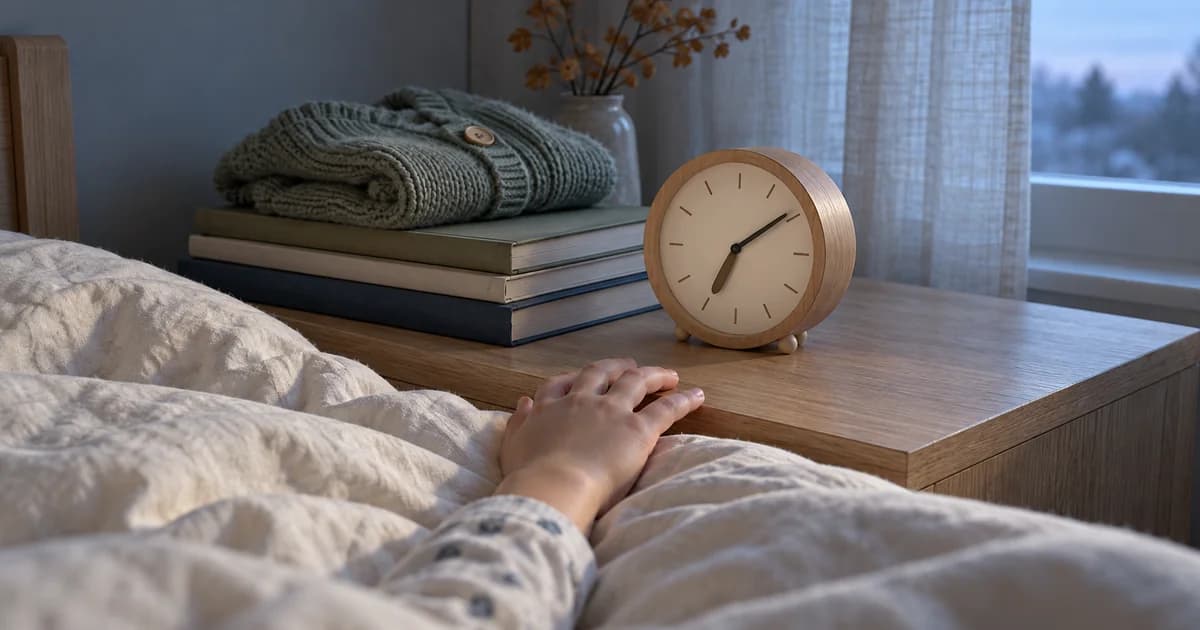
If your child wakes early, a clock with hands by the bed can help. Agree that your child can get up when the short hand is on seven and the long hand points straight up. Then the clock gives the signal, and your child can see for themselves whether it is time.
If your child is still learning o'clock times, read about how to start teaching your child to tell the time.
How can your child help change the clock?
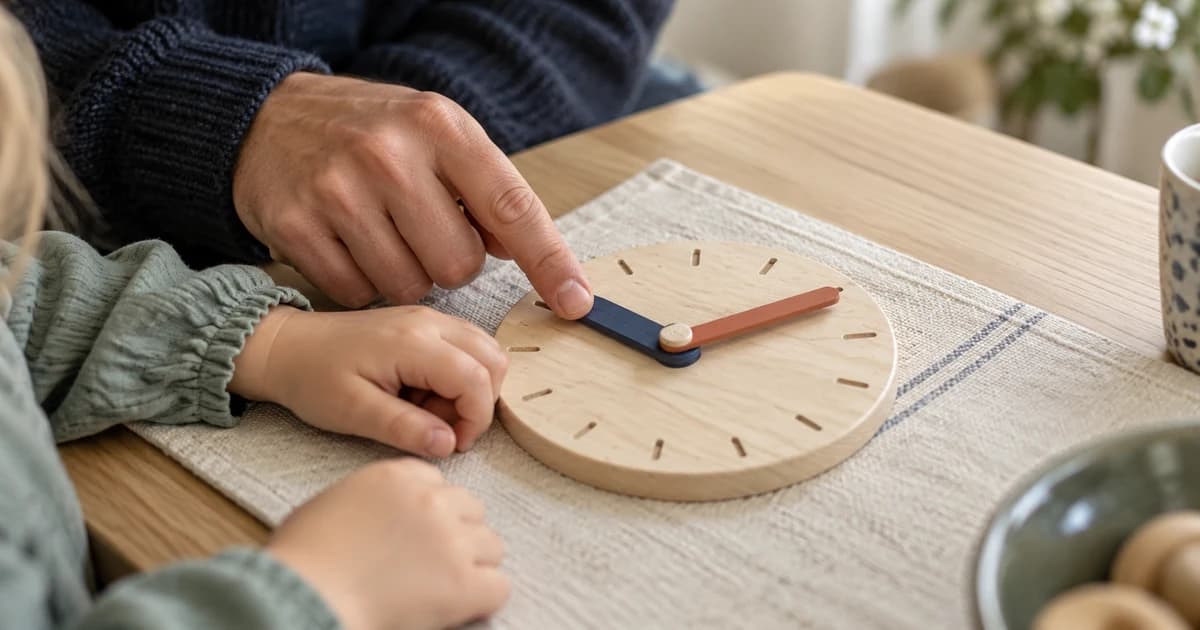
Your child can change an analogue clock, a clock with hands, by turning the long hand all the way round backwards. The short hand follows along and moves back one number by itself. Your child sees with their own eyes that one full turn of the long hand is one hour. If the clock has a small wheel on the back, you can turn that instead.
This evening you can try it on a clock you have at home, and set it right again afterwards:
- Ask your child where the short hand is pointing now.
- Let your child turn the long hand all the way round backwards, slowly and with you beside them.
- Ask where the short hand is now and what time it says now.
- Turn the long hand one full turn forwards again, so the clock shows the right time.
On Sunday morning, your child can do the same with the clocks at home that need changing. Compare with a phone, which will have updated itself overnight, so your child sees that both show the same time. How long an hour actually feels is a different thing from how far the hand travels, and we have written about that in how long five minutes is to a child.
If your child would like more practice with hours and clock hands, we made Klokkeappen. It offers activities and games about analogue and digital time, with spoken instructions. It is meant for practice and repetition, so new ideas may still need an explanation from you first. The app stores list no ads or purchases within the app, and you can check supported languages and pricing there.