How long is five minutes to a child?
Reading a clock and understanding how long five minutes lasts are different skills. Help your child connect everyday activities with passing time.
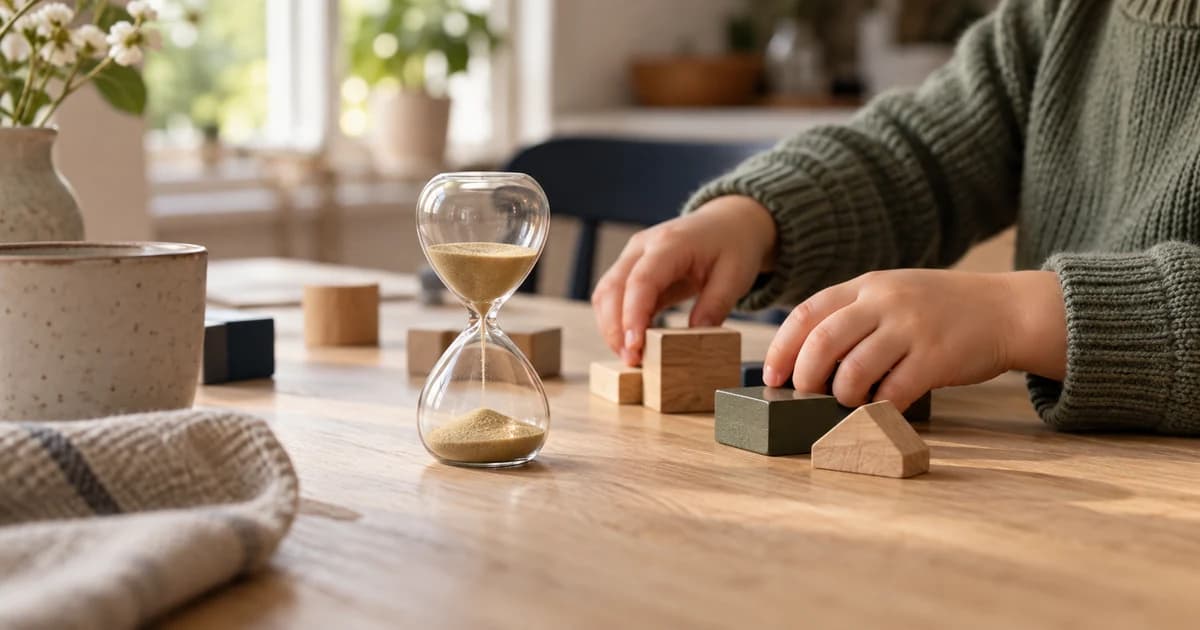
Reading a clock and having a feel for five minutes are different things. Your child can practise the first by looking at clock hands. You can help with the second by naming stretches of time in everyday life and showing them on the clock.
That is why a child can correctly say “quarter past three” and still ask, five minutes later, whether dinner is a long way off. They have learnt one skill and are still working on the other.
Why can five minutes be hard to understand?
Time cannot be held or touched. A child can compare lengths with their hands, footsteps or two objects placed side by side. Time has no equivalent shape. Once it has passed, it is gone.
Time also feels different in different situations. Five minutes can fly past during a favourite game and drag in the back seat on the way to visit family. Adults may have forgotten that reading the clock and feeling time pass were once separate discoveries.
When you say “We are leaving in five minutes”, your child may hear a number without anything to compare it with. It does not necessarily mean they are ignoring you. They may not yet know whether five minutes is enough to finish a tower or only to find their shoes.
How can a clock make five minutes visible?
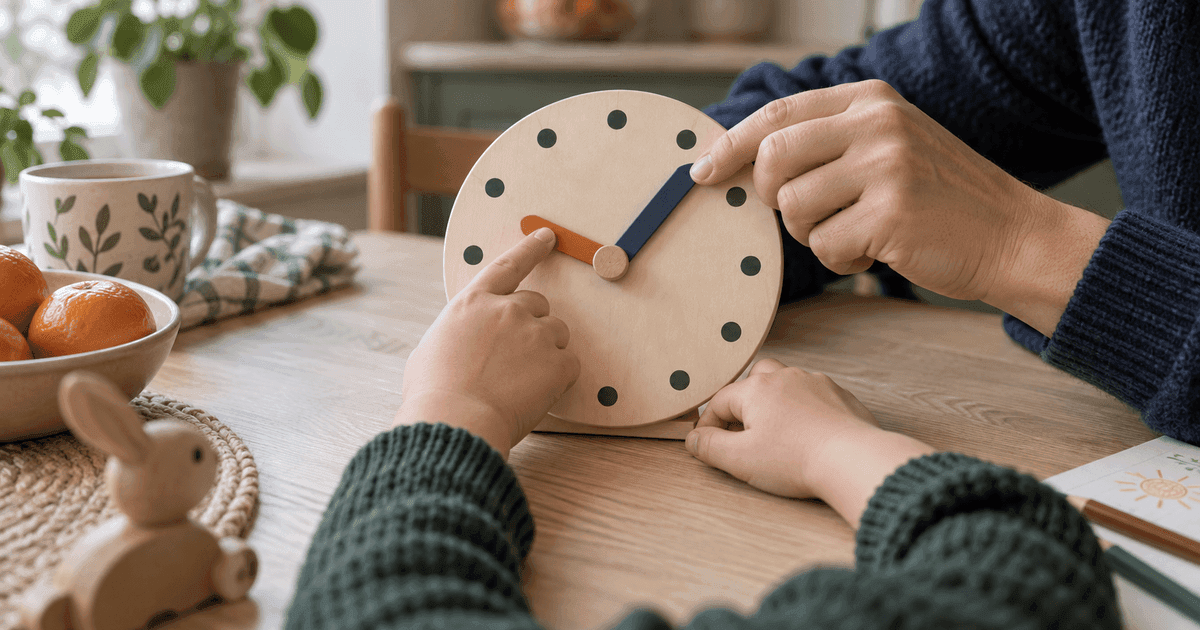
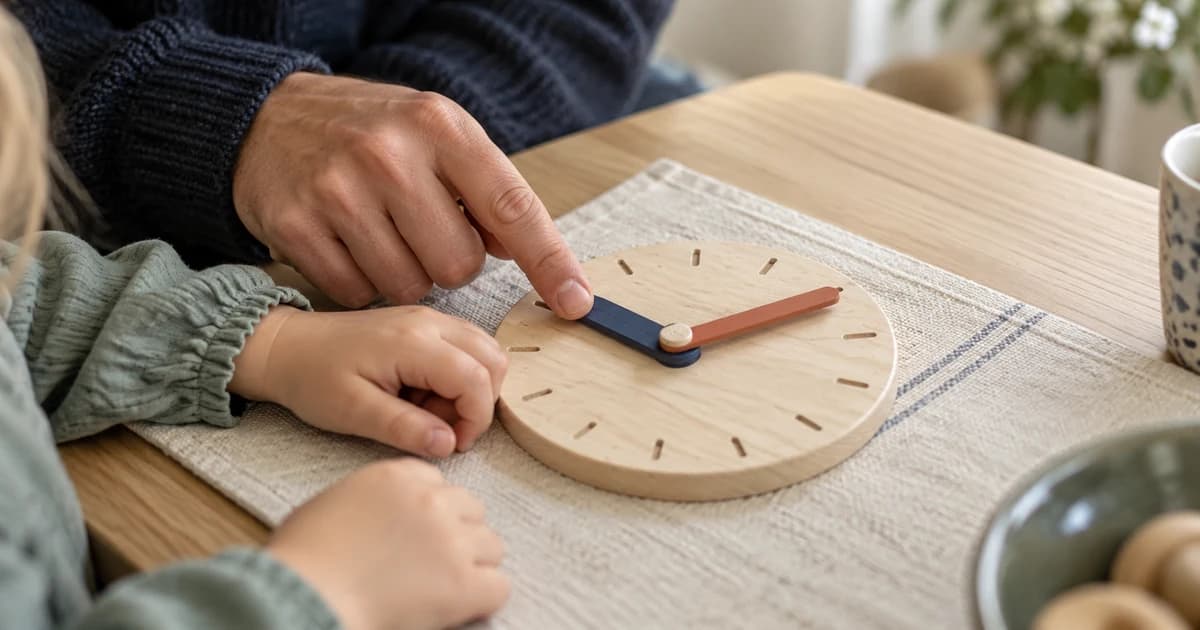
An analogue clock, which has hands, shows time passing through the movement of the long hand. In five minutes, it moves from one number to the next.
Half an hour is half a turn. After seeing it happen several times, “another half hour” may start to mean more than words.
Next time you say “five minutes left”, point to the clock: “When the long hand reaches the next number, we will leave.” Your child experiences the number, the clock and the wait together. When they are ready to read minutes, see our suggested order for learning time.
What could you try tonight?
Name periods of time your child already experiences and use the clock to show them. Choose one or two simple activities:
- Time toothbrushing and say afterwards how long it lasted.
- Watch how far the long hand travels during one episode of a programme.
- Guess how long tidying toys will take, then check together.
- Mention both the beginning and the ending, so your child experiences the whole period.
Explaining half an hour only in words can be as difficult as explaining how heavy a kilogram feels. Everyday experiences give your child something to compare it with. There is no need to turn each activity into a lesson.
You can repeat the same familiar example on another day. Read more about practising telling time at home.
Klokkeappen offers practice with analogue, digital and English time expressions through spoken tasks. The feeling of how long something lasts is something you explore together in everyday life, with a real clock nearby.